


Short Taoist Practice Programs
Online training in Qigong, Daoyin, Taijiquan, and Taoist lifestyle practices
Explore the first Taoist practice programs offered
by Taoist-Lifestyle.com.
Beginning in 2026, additional programs and online seminars will be added, expanding into Chinese philosophy, Taoist wisdom, Internal Martial Arts, and related practices.


You do not need to follow a particular belief or path to benefit from Taoist practice.
With sincerity and perseverance, anyone can begin.
These short Taoist programs provide simple, effective methods for cultivating strength, balance, and awareness. Through Qigong, Daoyin, Taijiquan, and related practices, you are invited to explore how small, consistent steps can bring meaningful change.
“My fate depends on me and not on Heaven.”
— Taoist saying
(transl. Prof. Dr. Dan K.J. Vercammen)

Foundations of Well-Being

Strength & Resilience
Build balanced strength, mobility, and stability through gentle, structured exercises based on Taoist principles.

Thoughts & Emotions
Learn methods that help quiet the mind, release tension, and improve emotional balance through breath and movement.

Self-care & Health
Develop simple practices that support your health, immunity, and overall well-being — grounded in Taoist medicine and lifestyle teachings.

NEW!
Yuanqigong Program
75
The Walking Exercises of the Eight Immortals
Yuanqigong: Baxian Xinggong
A self-paced Yuanqigong program teaching the classical Walking Exercises of the Eight Immortals.
Valid for 3 months
3 months (90 days) access
Downloadable short exercise videos (practice reference)
Self-paced learning
Exclusive handouts & additional explanations
Drawings of the Eight Immortals
Background information about Yuanqigong
Correct historical and cultural context
9 lessons with 26 steps
Choose your own starting date
Lifetime access to the exercise video library

NEW!
Taijiquan Program
300
Yang Style / Yue Substyle Taijiquan
A one-year Taijiquan program teaching the foundational postures and movements of the Yue Substyle.Postures & Simple Movements (81 movements)
Valid for 12 months
1 year (364 days) access
Downloadable short exercise videos (practice reference)
Self-paced learning
5 hours of guided video instruction
Explanations of Taijiquan principles
Correct historical background
9 lessons with 66 movements
Choose your own starting date
Lifetime access to the exercise video library
Short Taoist Practice Programs
Begin your journey with one of our practice programs.
For returning students: please log in via the menu to continue your training.

All Practice Programs

Below you will find an overview of the short Taoist practice programs currently available.
This section is for information only.
If you are already enrolled in a program, please log in through the hamburger menu to continue your training.

All our programs are supported by two pillars:
Theory
-
Explore Classical Chinese Philosophy
-
Learn about Taoist Health Science
-
Understand the Taoist perspective on the body
-
Immerse yourself in Taoist Culture
-
Grasp the principles and theories behind Taoist practices
Practices
-
Experience Taoist health practices (Qigong & Daoyin)
-
Discover how Taoist meditation promotes relaxation and clarity
-
Engage in the Internal Martial Arts (Taijiquan, Baguazhang, Shidaxing)
-
Embrace the Taoist way of living in daily life
-
Delve into the foundations of Taoist Internal Alchemy (Neidan practices)
Our teachings draw from three essential sources:

Taoist Internal Alchemy
Some of the famous ancient Chinese bronzes actually show xian (so-called immortals) themes. The early writers on the subject who were also xian admirers (such as Zhuangzi and Laozi), mention the kind of practices associated with these people and the results and stages of these practices. They do not mention metallurgy, however. Clear evidence of the connection between metallurgy, alchemy, and xian culture can be found in later writings, such as the Baopuzi Neipian 抱朴子內篇 (Inner Chapters of the Master-Who-Embraces-Simplicity). In this work, Ge Hong writes about jindan 金丹 (gold and cinnabar or golden cinnabar) and we can find recipes and methods to make gold and the immortality medicines.
Another famous writing containing valuable source material is the Zhouyi Cantongqi 周易參同契 (Identifying the Three as One Following the book of Changes), a Taoist writing on alchemy and cosmology. This and other writings make it obvious that the purpose of the alchemy was was not just making gold (and silver) but the elevation of the alchemist towards heavenly status, which exactly was what the xian were after. The Book of Changes was introduced not as a book on divination but as one on the internal changes of the alchemist's body and its symbols became illustrations of the stages of these changes.
Chinese Culture
&
Chinese Philosophy
Taoism, as both a philosophy and a lived tradition, is transmitted through established Taoist lineages such as the Heavenly Masters (Tianshipai). Each tradition preserves specific practices, teachings, and written and oral transmissions.
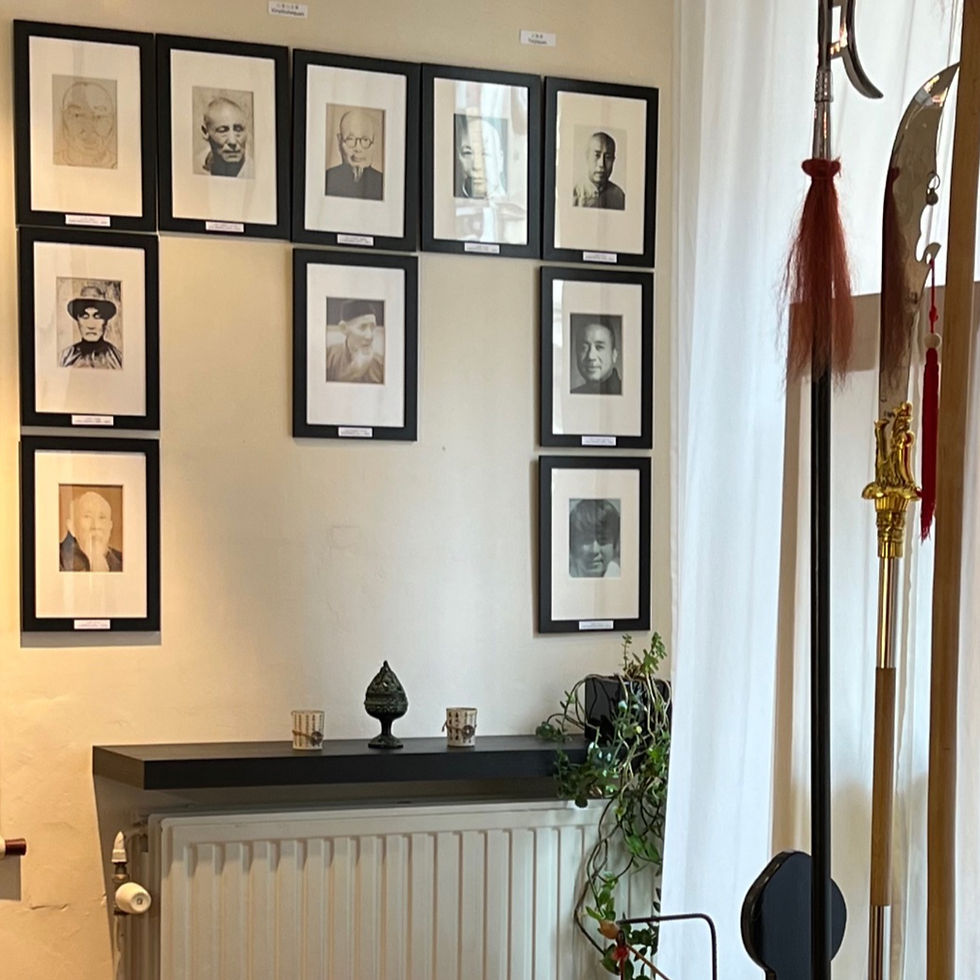
The lineage we follow comes from Southeast China and traces back to the Taoist alchemist Zhang Boduan, whose influence shaped later developments in Taoist Internal Alchemy. His views on practice and philosophy form the foundation of our study of Taoist Alchemical Culture.
Taoist Culture is broad and complex, and proper understanding requires expert guidance. At Taoist-Lifestyle.com, teachings on Taoist philosophy, culture, and alchemy are offered by Prof. dr. Dan K.J. Vercammen, a scholar and practitioner of the Yinyang School of Jindan (Golden Cinnabar) Taoist Alchemy.
Internal Martial Arts
The Internal Martial Arts we teach are Taijiquan, Baguazhang, and Shidaxing (Xinyiliuhequan).
Our Taijiquan follows the Yang Style as transmitted through the lineages of Dong Yingjie, Tian Zhaolin, and Yue Huanzhi.
The Baguazhang in our curriculum is mainly Liang Style, with elements of Cheng Style. Prof. dr. Dan K.J. Vercammen began studying Baguazhang in 1988 with Masters Li Ziming and Fu Qinglong. The art is known for its circular, spiraling movements and its roots in Northern Chinese boxing and Shuaijiao (Chinese wrestling).
Shidaxing (“Ten Great Forms”) refers to the Shanghai versions of Xinyiliuhequan. Dr. Vercammen learned Shidaxing from 1985 onward with Masters Zhou Minde and Fu Qinglong, becoming the first Westerner to study this art. Shidaxing is the oldest and most dynamic of the Internal Martial Arts, with techniques inspired by the movements of ten animals.

What can you expect?
Our short Taoist practice programs are designed to offer a clear and accessible introduction to traditional Taoist methods.
Each program provides structured guidance, practical exercises, and supportive materials to help you develop strength, balance, and inner clarity.
Learning Goals — Short Taoist Practice Programs
-
Introduction to the basic principles of Taoist movement and posture
-
Foundational knowledge of Qigong, Daoyin, or Taijiquan (depending on the program)
-
Simple breathing, relaxation, and focus techniques
-
Understanding how Taoist practice supports physical and mental well-being
-
Learning to practice safely and correctly on your own
-
Gaining insight into the Taoist view of body, mind, and balance
You will get:
-
Practice lessons by video
-
Clear explanations of each exercise and its purpose
-
Downloadable practice videos (if included in the program)
-
Written support materials (if offered for the program)
-
Email support for technical questions
-
The ability to practice at your own pace anytime, anywhere
We treat all personal information with sincerity and respect.
If you need guidance or have questions about your practice, we are here to support you.
Each program is created and overseen with care by
Prof. dr. Dan K. J. Vercammen and Angela J. H. Verkade.

